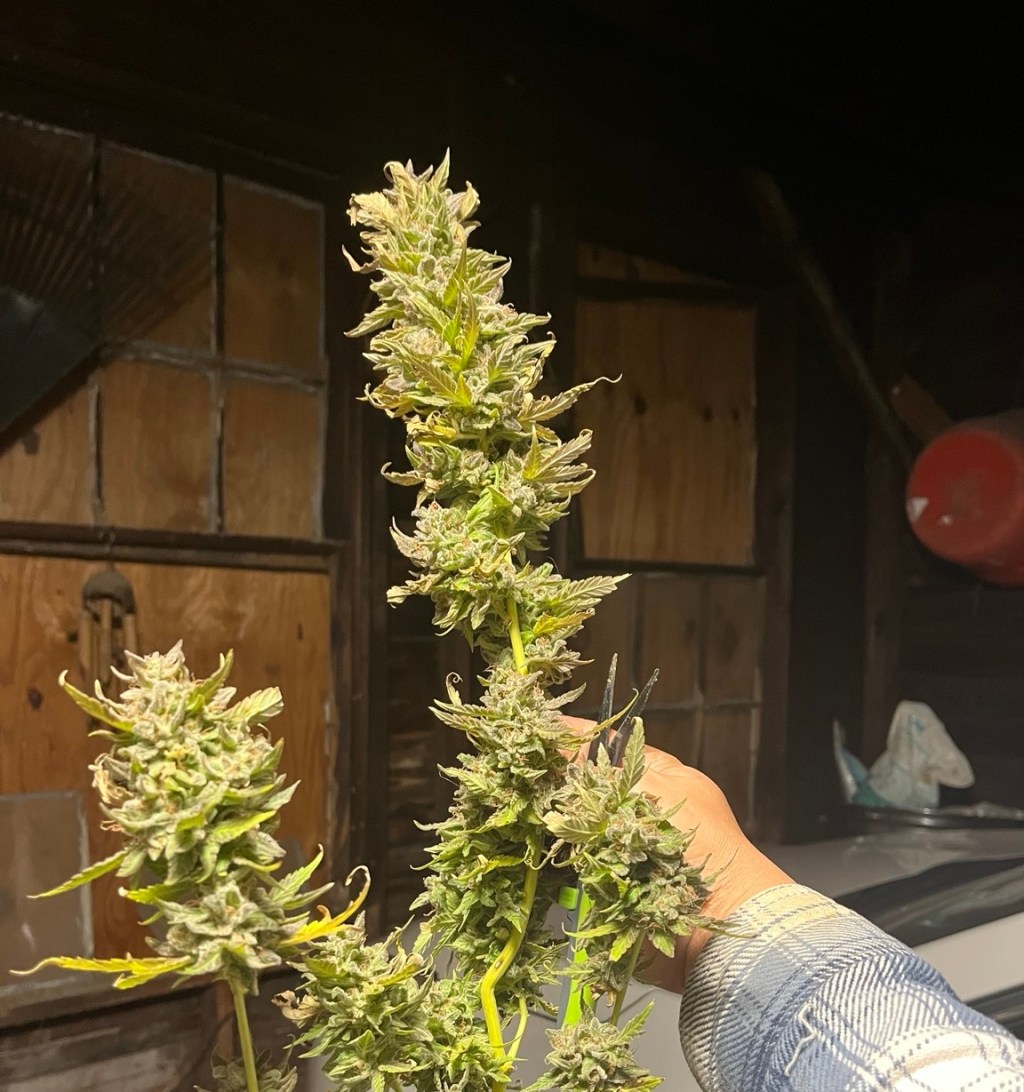
My second Durban Cake was just about ready to chop when I flipped up some sugar leaves and found clusters of little dark bugs hiding underneath. So I washed the buggy branches before they went in to dry. I also found a few branches with no bugs on them and left those unwashed, so now I’ve got washed and unwashed bud from the same plant, same harvest, same day. This is the start of that comparison, not a finished smoke report.
Here’s what I found, the wash I used, and how I handled the washed branches from the drip-dry to the fridge. Once both batches are dry and cured, I’ll come back and add how they compare.
What I found on the plant
The bugs were black, about the size of a sesame seed, crawled very slowly, and sat in clusters under the sugar leaves, lined up along the veins. That all points to aphids. In the fall, crowded aphid colonies grow darker winged forms, which fits what I saw. [1] The buds themselves looked clean and frosty, with no rot or sooty mold.
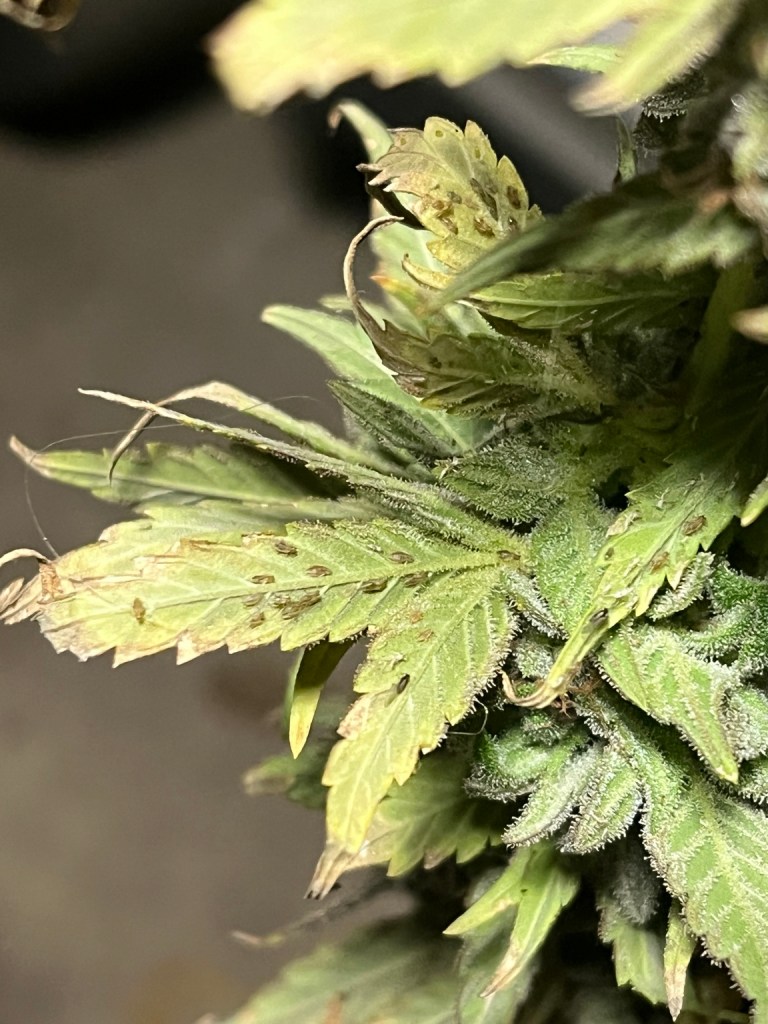
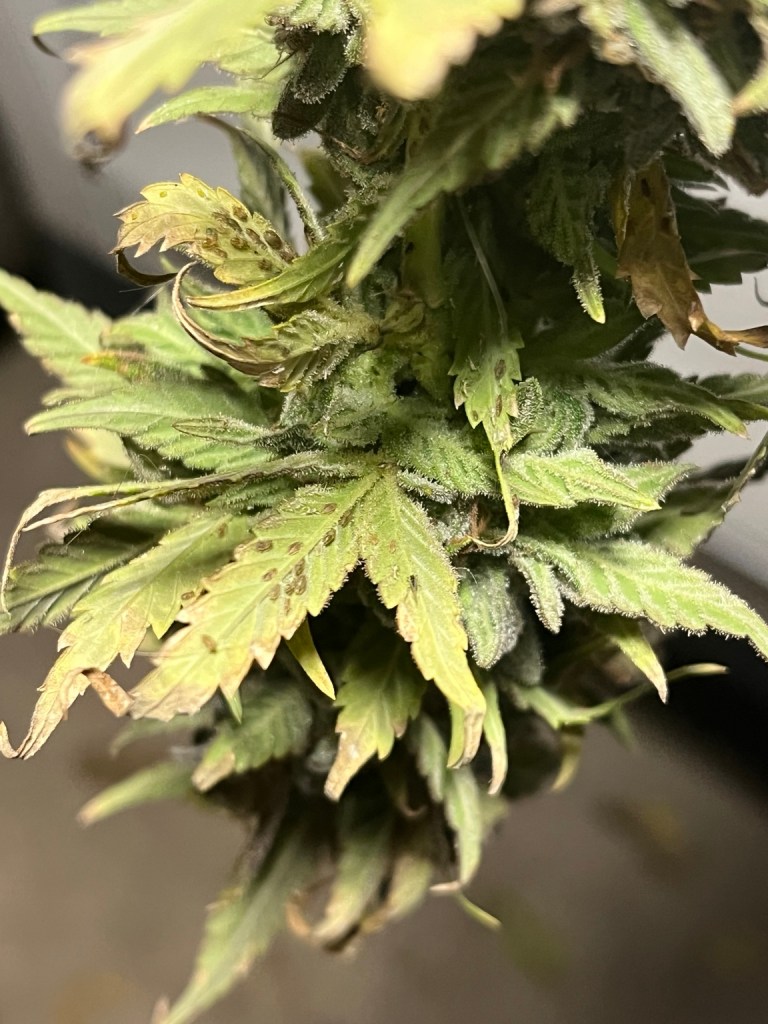
Aphids feed on sap from living tissue, so they don’t survive the dry. The problem is that their bodies and the sticky honeydew they leave behind stay in the bud. That’s why I washed.
Three bud wash recipes
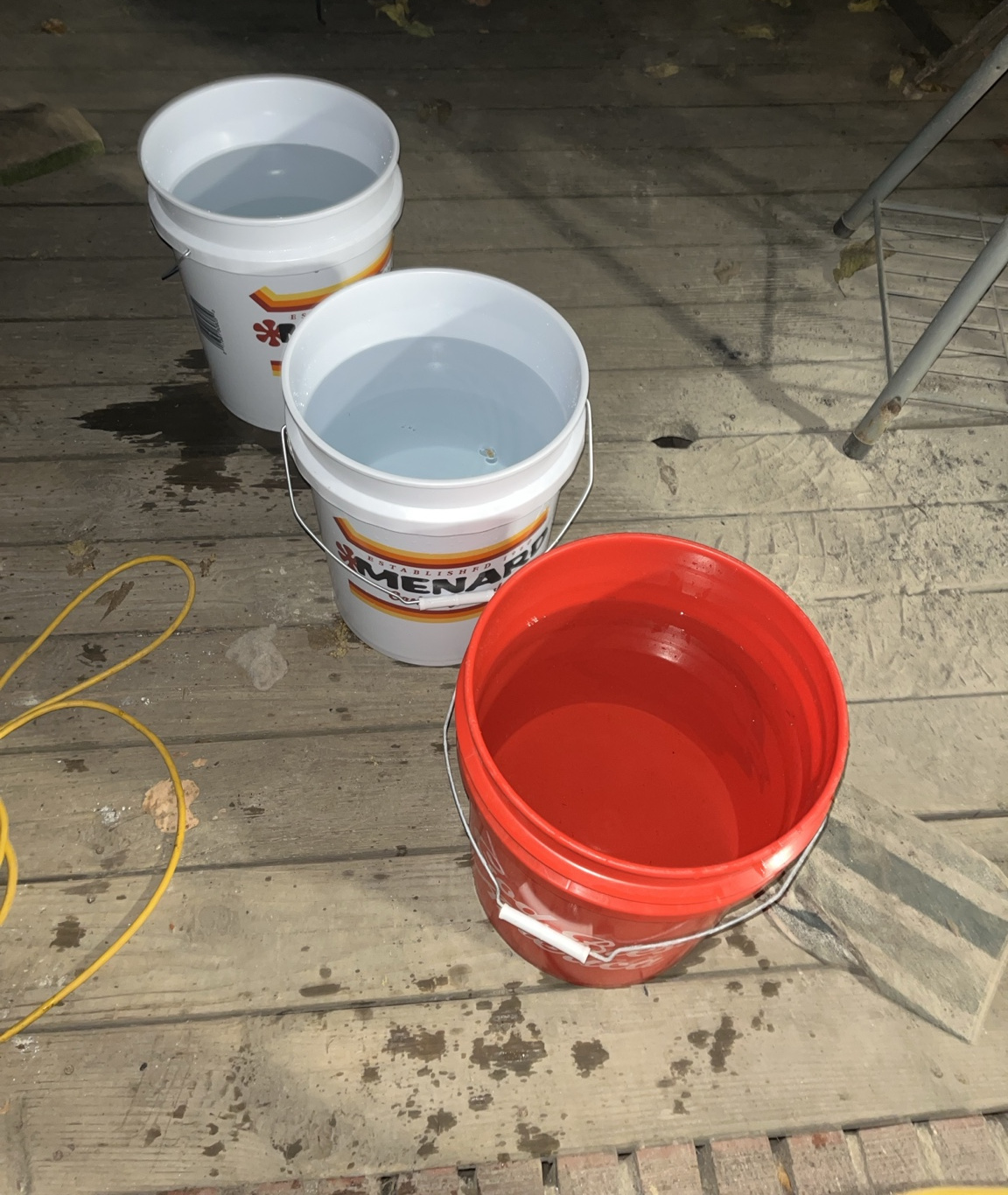
All three use 3 buckets, one wash bucket and two clean-water rinses. Use lukewarm water for the wash and cool water for the rinses, and make sure every bucket is dechlorinated. I use a tiny pinch of vitamin C powder to dechlorinate the water.
- Lemon juice and baking soda, the classic. Mix 1/2 cup baking soda and 1/2 cup lemon juice in 5 gallons of warm water. It should fizz. [2]
- Hydrogen peroxide. Use 1 cup of 3% drugstore hydrogen peroxide in 5 gallons of water. [2] Keep it mild. Peroxide only works on the surface, and in commercial use it has been linked to faded color and lost terpenes. [3]
- Plain water triple rinse. Three buckets of plain dechlorinated water. It’s the gentlest option, and bugs and honeydew come off physically.
For any of them, swish each branch gently for about 30 seconds per bucket. Don’t bang it against the side, because that knocks trichomes off. Change the water when it gets cloudy.
What I used: baking soda and vitamin C
I did a three-stage wash, one wash bucket and two rinses, with one swap from the classic recipe. I used a tablespoon of vitamin C powder in place of the traditional lemon juice. Vitamin C (ascorbic acid) is an acid too, so it still reacts with the baking soda and fizzes, just a little more gently. It doesn’t add the sugar, pulp or preservatives that come with bottled lemon juice. And it neutralizes chlorine and chloramine at the same time.
- The wash bucket got 4 gallons of lukewarm water, 6 tablespoons of baking soda and 1 tablespoon of vitamin C powder.
- Rinse buckets 2 and 3 were plain water with a small pinch of vitamin C powder in each to dechlorinate it.
- About 30 seconds in each bucket, with a gentle swish. Washing the whole plant took me about 2 hours.
- County water, carried in the same 4-gallon cooler jugs I used for all my watering and feeding this season.
The vitamin C amount is my estimate of the acid in 1/2 cup of lemon juice, scaled to 4 gallons, not a tested recipe. Don’t skip the two rinses. Dissolved baking soda tastes salty, and the rinses are what take it off the buds.
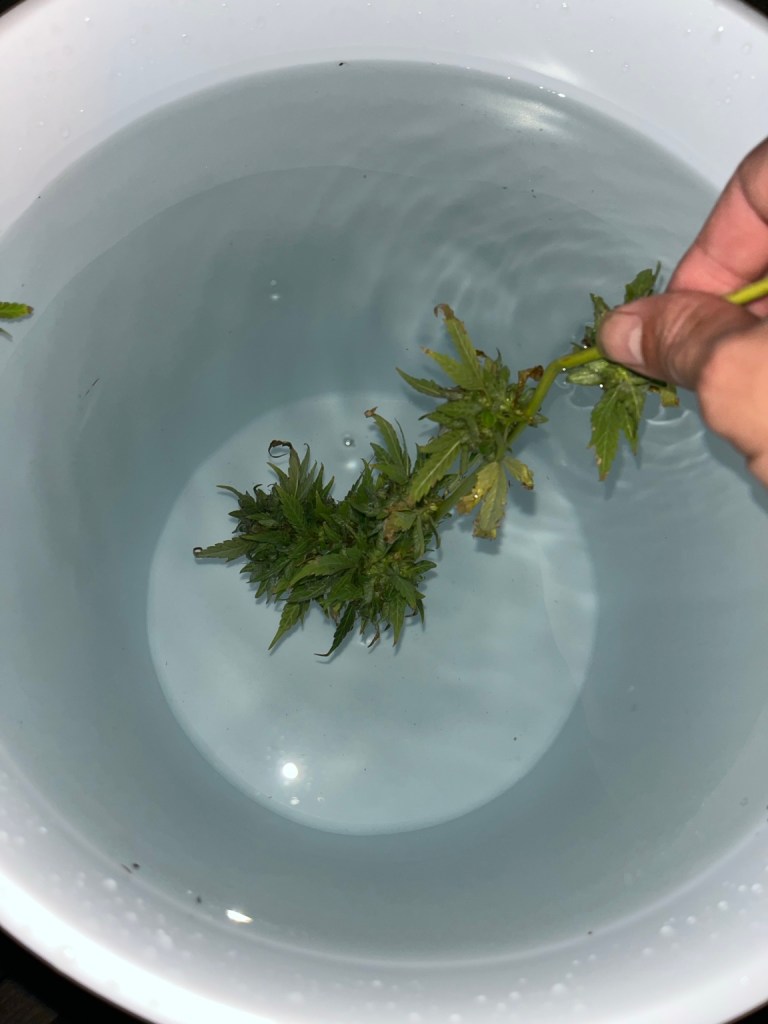
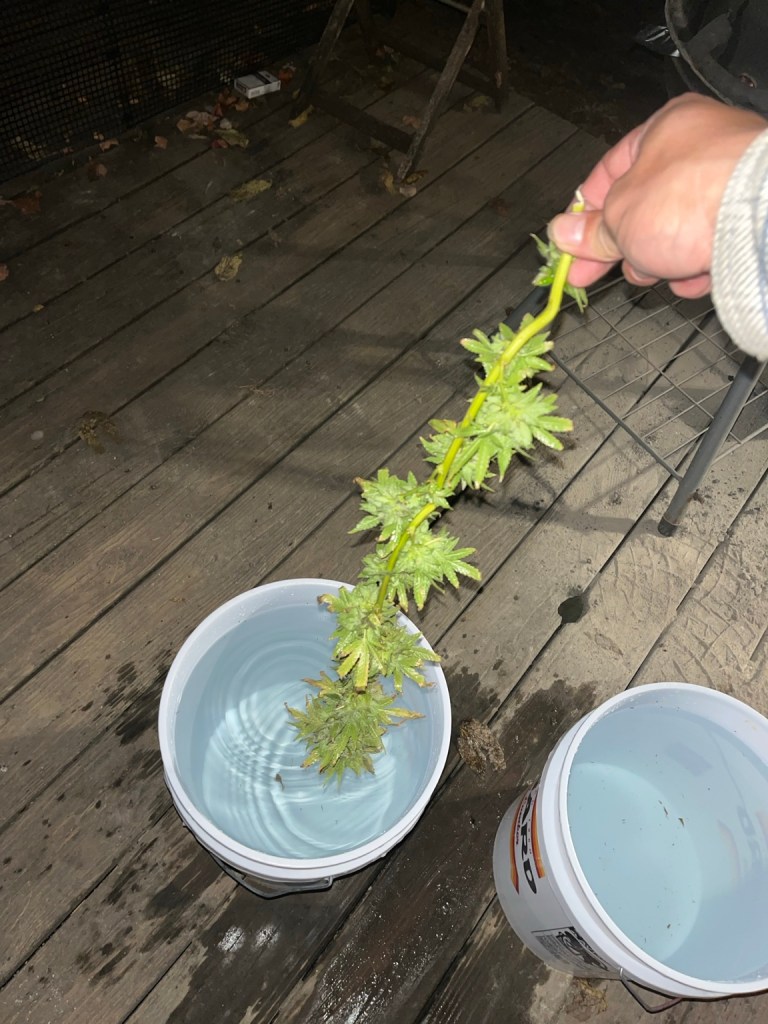
About 30 seconds per bucket with a gentle swish, then a quick drip before the next one.
Drying washed bud
After the wash, I hung the branches outdoors to drip-dry overnight for about 8 to 10 hours, with an oscillating fan set up below them, moving the air without blowing on the buds. Once the outside of the buds wasn’t damp to the touch anymore, and before they started to crisp up, everything went into the fridge for my Lotus dry, washed and unwashed branches side by side.
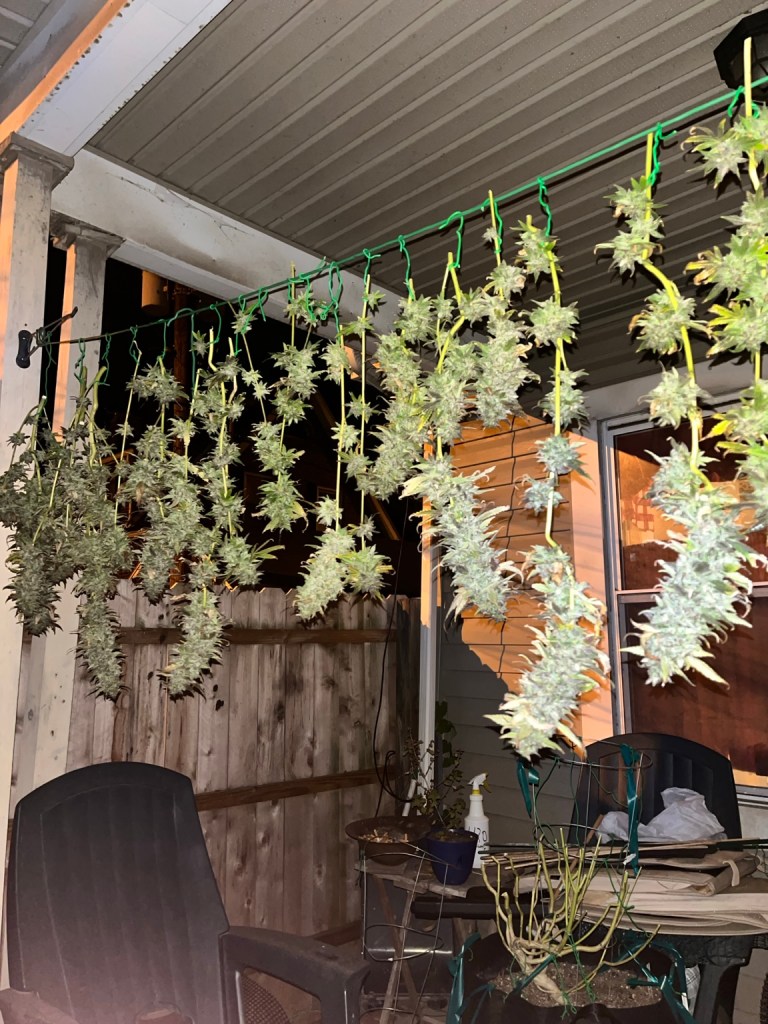
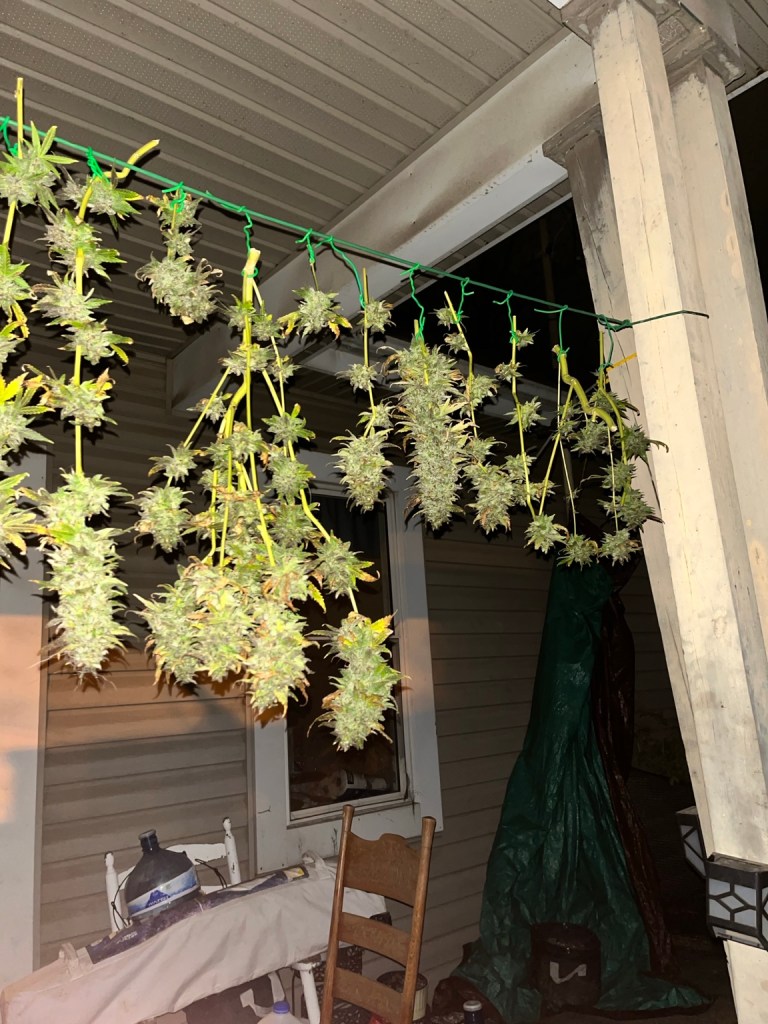
Drip-drying overnight under the porch roof before going into the fridge.
One change from my usual dry: no paper bags over the branches this time. Bagging freshly washed branches would trap moisture against the buds, so they’re hanging open in the fridge. The only paper in there is what always lines the bottom of the fridge, where my cardboard tray of smaller buds sits. It’s also the most I’ve had in the fridge at once so far, three dowels of hanging branches plus the tray about half full. With that much in there, I’m keeping a close eye on the hygrometer.
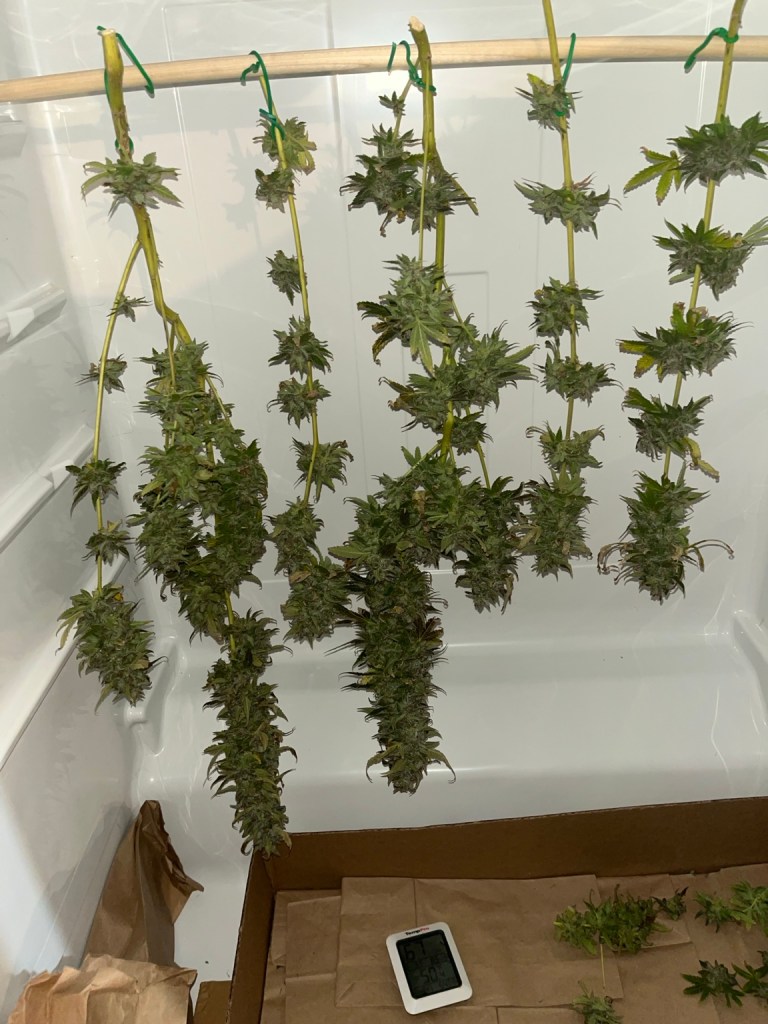
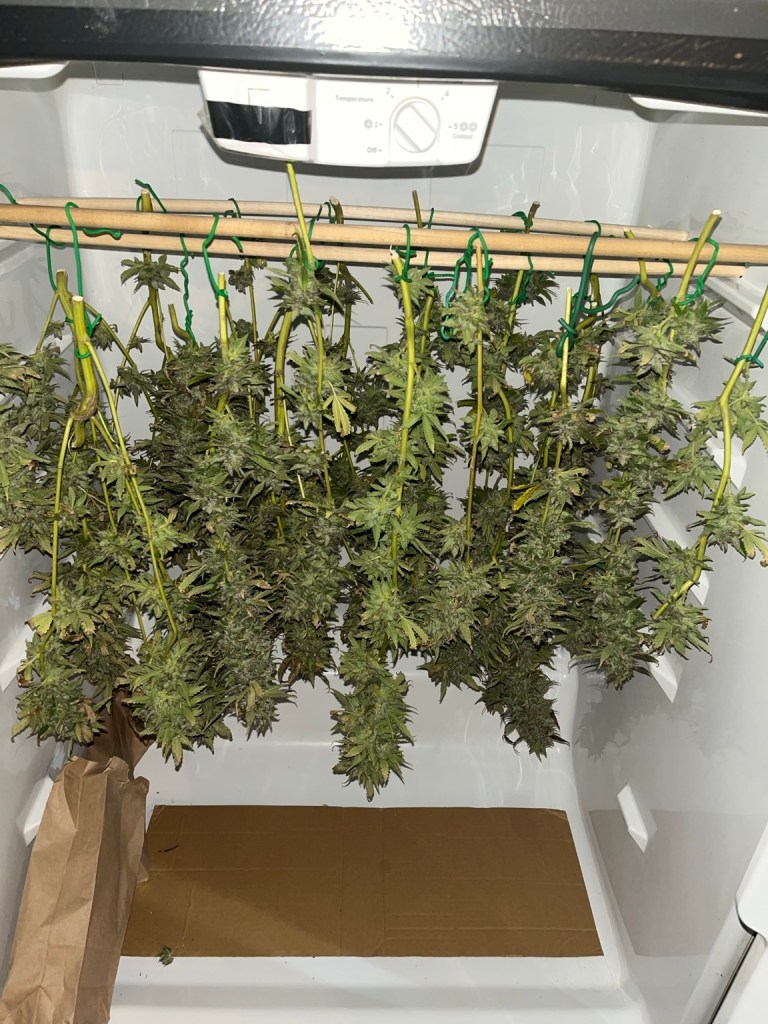
Into the fridge for my Lotus dry. Three dowels, the most I’ve hung at once so far.
I also set aside some fresh material from the washed branches and froze it for coconut oil later, so nothing from the bugs ends up in the oil.
What I’ll compare once they’re ready
Now it’s the waiting game. Once both batches are done drying and curing, I’ll add how they compare on dry time, smell, texture and the smoke. I haven’t tried either one yet, so there’s no taste or smoke report here. For now this is just the wash and the dry as they happened.
What the research says
I couldn’t find any published study that tested home bud washing. These are grower methods, not proven ones. The closest research is a University of Guelph study that treated dried buds with 2% hydrogen peroxide plus UV light, which cut Fusarium mold spores by 62%. [4] That isn’t the same thing as a bucket wash.
Two things are clear, though. Washing doesn’t save bud that already has rot or mildew. That bud still goes in the trash. And washed bud takes longer to dry, so it needs good airflow and a close eye to keep it from molding.
For keeping aphids off your plants in the first place, see the aphid section of Outdoor Pest & Disease Prevention.
Free printable: Lotus Dry Cheat Sheet
My cold, slow fridge dry on one page: the setup, what to watch during the dry, how I know it’s done with the sweat test, and a dry log to fill in. Enter your email, confirm it, and the link arrives in your inbox along with all my other free printables.
After you sign up, check your inbox for an email from WordPress.com and tap Confirm. Your printables arrive right after. Don’t see it? Check your spam or Promotions folder. One newsletter a month, unsubscribe anytime. See all the printables
Sources
[1] Colorado State University, Agricultural Biology. Cannabis aphid, Phorodon cannabis. agsci.colostate.edu
[2] Homestead and Chill. How to Wash Cannabis Flower Buds After Harvest. homesteadandchill.com
[3] Technology Networks. Largest US cannabis farm shares two years of mold remediation research. technologynetworks.com
[4] University of Guelph, Food Science. Chen, poster abstract, GFSS Symposium 2019: an advanced oxidation process (2% hydrogen peroxide with UV-C) on cannabis buds. Read the abstract (PDF)
This is my own experience from one season in southern Ohio, not a tested result. Grow only where it’s legal for you, and keep cannabis and garden products away from children and pets.


Leave a Reply