Outdoor Organic Pest & Disease Prevention
Prevention first, scouting second, beneficial bugs third, and label-approved products only when you really need them. Everything on this page works without neem, and I show you the research behind each step.
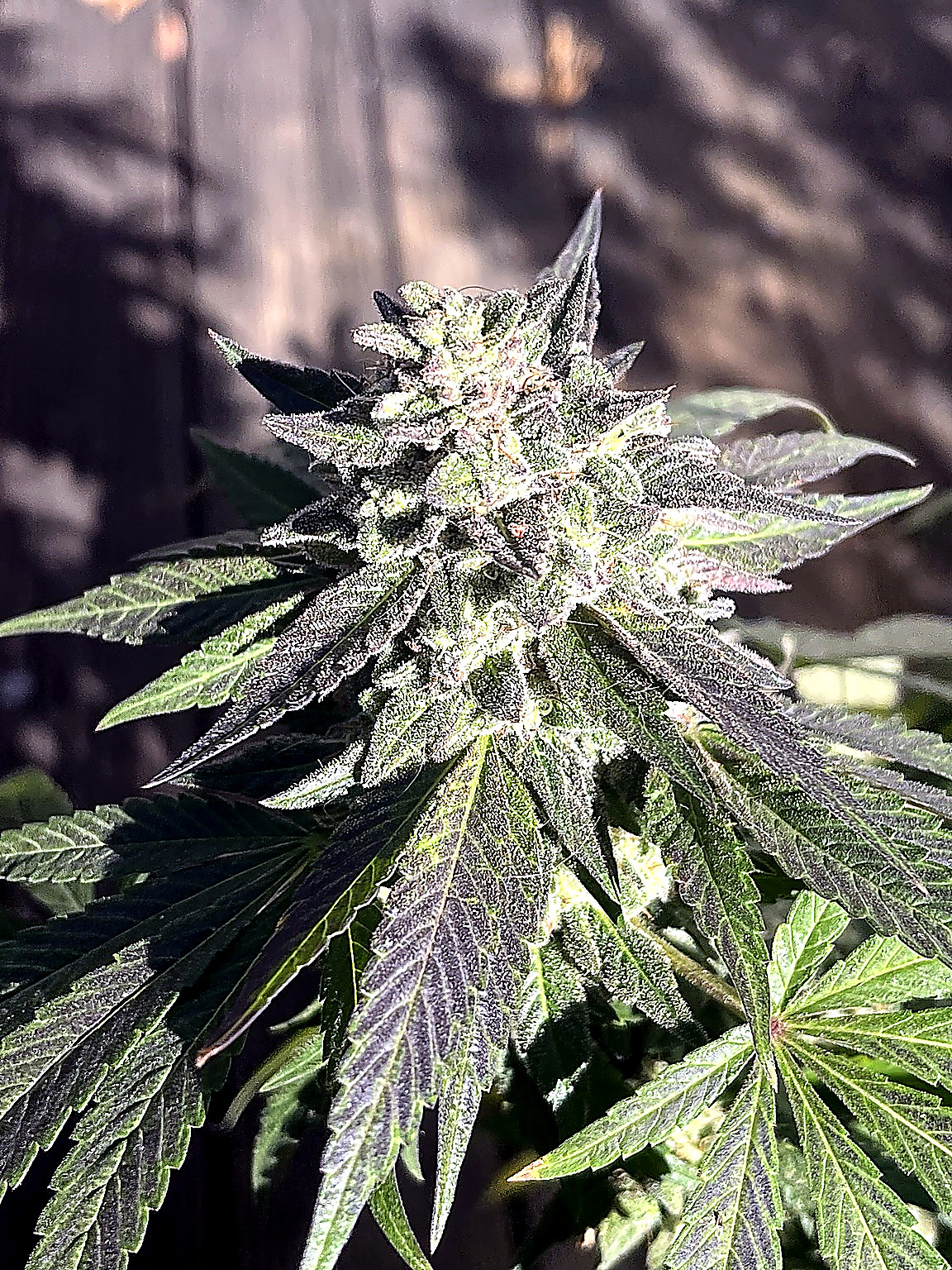
A quick note on the research. Most of the published work on cannabis pests and disease comes from indoor grows, greenhouses or supplier guides. It helps explain how these problems work and what might help, but it doesn’t prove you’ll get the same results in an outdoor garden. Where outdoor research is thin, I say so instead of passing off a greenhouse result as an outdoor one.
1. Start clean, with tolerant genetics
A 2024 review by Buirs and Punja names two basics of disease management: grow genetics that can tolerate or resist disease, and start with clean plants. [1] Some strains handle powdery mildew a lot better than others, and researchers have even found a resistance gene, so it’s worth asking the seed seller whether a strain has shown mildew tolerance. [2][3] Tolerant isn’t immune though, so keep scouting.
2. Avoid wounds and keep the garden clean
Researchers at Simon Fraser University found that wounds on roots, stems and buds give disease organisms an easy way in. [4] So I handle my plants gently, clean my pruners between plants, and get dead or diseased material out of the garden as soon as I see it. The Buirs and Punja review lists sanitation as a core tactic too. [1] If you grow in coco, the same SFU study found unpasteurized coco can carry fungi that lead to mold. [4]
3. Water the soil, not the canopy
Watering is another tactic in the Buirs and Punja review. [1] That review is about greenhouses, so outdoors I apply it by watering at the base of the plant and not letting leaves and dense flowers stay wet any longer than they have to. Good spacing and airflow help for the same reason.
4. Scout every week
Check the undersides of the leaves, the inner canopy, the stems and the top of the soil. The main pests reported on cannabis in Canada and the USA are thrips, spider mites and fungus gnats, with russet mites, broad mites and root aphids showing up now and then. [5] The companies that sell beneficial bugs also say regular scouting is the base of any pest plan. [6] I keep a log with dates and photos, because it makes patterns a lot easier to spot.
Free printable: Spot Mildew and Bud Rot Early
The earlier you catch it, the more bud you save. This two-page guide shows what early powdery mildew looks like on one of my own buds, the first signs of bud rot and Septoria, where to look on every scouting walk, and exactly what I do the day I find it, plus a scouting log. Enter your email, confirm it, and the link arrives in your inbox along with all my other free printables.
After you sign up, check your inbox for an email from WordPress.com and tap Confirm. Your printables arrive right after. Don’t see it? Check your spam or Promotions folder. One newsletter a month, unsubscribe anytime. See all the printables
5. Use beneficial insects and mites
Beneficial bugs are the most widely used pest control in commercial cannabis, things like predatory mites, soil predators, minute pirate bugs, nematodes and parasitoids. [5] Suppliers publish release programs that include outdoor cannabis, like predatory mites for spider mites. [6][7] Just keep 2 things in mind. These guides come from the companies selling the bugs, and there isn’t much independent outdoor data yet. And outdoors, the weather, when you release them and what’s growing nearby all change how well they work.
6. Caterpillars: Bt
The Pacific Northwest Pest Management Handbook has a pesticide table for hemp pests, based on the Oregon Department of Agriculture’s list for pesticides and cannabis, and it includes Bacillus thuringiensis (Bt) products (var. kurstaki and var. aizawai) for caterpillars. That table lists a 4-hour restricted-entry interval and a 0-day pre-harvest interval for those entries. [8] Those numbers belong to specific products on one state’s list though. Before you use any Bt product, make sure the label allows it on cannabis and it’s allowed where you live, and check whether it’s OMRI Listed. Catching caterpillars early is worth the effort, because every spot they chew is a wound that rot can get into. [4]
7. Powdery mildew and bud rot
The SFU work describes powdery mildew and Botrytis, Penicillium and Fusarium bud rots as the major diseases. [4] Prevention (steps 1 to 3) matters most. In SFU’s greenhouse trials, several biological and mineral-based products cut down powdery mildew, including ones based on potassium bicarbonate and Bacillus subtilis. [9] That doesn’t tell you a product is legal, labeled or a good idea on flowers where you grow. I don’t recommend specific products here, so check the label and your local rules.
A few things are specific to powdery mildew. It’s favored by high humidity, shade and still air, so rain by itself isn’t the main driver. Rain soaking into dense buds is what drives bud rot, which is a different disease. Powdery mildew fungi also tend to be picky about their hosts. The main one on cannabis, Golovinomyces ambrosiae, is most often reported on plants in the daisy family, which includes ragweed, while the powdery mildew usually found on cucumbers is a different species. [2][3] Keeping weeds down around your grow is worth doing, and moving plants away from a garden crop with mildew can’t hurt, but that crop may not be the source.
8. Septoria leaf spot
Look for small brown spots with bright yellow halos, starting on the older, lower leaves and inside the canopy, where it stays damp. The spots grow to about a quarter inch with gray or white centers, and badly hit leaves turn yellow and drop. [10][11]
The fungus survives the winter in old infected plants and debris, where it can stay alive for up to 9 months in cool, dry conditions. Rain splash carries its spores up onto leaves, and wind-driven rain carries them farther. New spots show up 7 to 10 days after infection, and it gets worse as the canopy thickens during rainy summers. [10]
- Get rid of old debris. Remove infected plants and leaves at the end of the season. In-ground growers can bury debris or move to a new spot. In pots, start with fresh soil and clean pots rather than reusing soil from infected plants. [10][11]
- Stop the splash. Mulch over the soil limits how far the spores move, and watering at the base keeps leaves dry. [10]
- Give plants room. Wider spacing and thinning help leaves dry faster. [10][11]
- Scout early. Start about a month after planting, focusing on older inner leaves and dense spots. Pull spotted leaves, bag them at the plant and trash them. [11]
- Sprays are backup. Bacillus-based biological products have suppressed Septoria in lab and greenhouse tests, but there’s no field data yet. Use only products whose label covers your use. [10]
9. Aphids
The aphids on leaves and stems mostly arrive on their own. Winged forms show up when colonies get crowded and fly off to find new plants, and the cannabis aphid can survive the winter as eggs on old plants and seed capsules. [12][15] Root aphids are different. They live in mineral soil and can come in with garden soil, homemade mixes or reused soil. Commercial bagged mixes are an unlikely source, because peat, bark and coir don’t usually carry them, and perlite and vermiculite are heated to about 1,800°F during processing. [14] Root aphids are usually whitish or brown with a waxy coating that can look like mealybugs, so check the roots with a magnifier if you suspect them.
Feeding itself does fairly little harm, but heavy infestations can stunt plants and cause wilting and yellowing. The sticky honeydew they leave can grow black sooty mold. [12][15]
- Go easy on nitrogen. High nitrogen levels boost aphid reproduction, so avoid overfeeding, especially with rich inputs like fresh manure. [12]
- Protect the natural enemies. Lady beetles, lacewings, hoverflies, pirate bugs and tiny parasitic wasps all eat aphids. Aphids that turn into swollen tan or bronze “mummies” have been parasitized, which is a good sign. Avoid broad-spectrum sprays that kill these helpers too. [12][13][15]
- Control ants. Ants farm aphids for their honeydew and chase predators away. [12][13]
- If you buy ladybugs, know that most purchased convergent lady beetles fly off within a day or two. Wetting the plants first, releasing them in the cool evening and setting them at the base of the plants may slow that down. [13]
- Clean up at season’s end. Removing old plants and weeds takes away places for eggs and aphids to wait out the winter. [12][15]
- Spray only when needed. Insecticidal soaps and oils kill aphids on contact, but only the ones they hit. Use products labeled for your use, and remember oils can burn leaves in hot weather. [12]
FROM MY GROW
My Pest Routine
I grow in the Ohio Valley in southern Ohio, where humidity ran 80% to 95% almost the entire summer. Caterpillars were very bad this year, and I saw a lot of people lose plants to bud rot after caterpillar damage. In my garden, a lot of the rot I found started where caterpillars had been feeding. That fits the research showing rot fungi get in through wounds [4], but I can’t say caterpillars are the biggest cause of rot everywhere. Even with this routine I still had some powdery mildew start on a couple of plants, and I was able to get it under control.
These are the products and frequencies I used. They are not a schedule to copy. Each product’s label decides what crop it’s allowed on, how often it can go on, and how close to harvest. Read the safety section below before using anything. I applied each product on its own in a one-gallon sprayer and never mixed them together.
In veg, starting about week three, I used Athena IPM two to three times a week and Monterey Spinosad once a week, or twice a week until insect pressure dropped. Early in the season, Spinosad seemed to clear up a leaf-miner problem on one plant, and I didn’t see it come back on that plant.
For caterpillars I used Southern Ag BT Thuricide during veg and flower, and sprayed more often around September 1st when I saw more caterpillar activity. I stopped about three weeks before harvest because I was worried about flavor. That’s my choice, not the product’s pre-harvest interval.
In flower I used either Lost Coast Plant Therapy or Grow Safe at times. I haven’t tested whether either one prevents bud rot or powdery mildew. How often and how close to harvest is always the label’s call, and no spray makes mildew-covered bud safe to smoke.
In the soil I used Sluggo Plus around the sides of pots for soil-surface pests. Being in the pot doesn’t make a product pet-safe, so it gets secured the way the label says. I also use Southern Ag Garden Friendly Fungicide as a root drench, to try to build up the plant’s own defenses even further.
Always check your plants for insect damage. In veg, I look in the evening or at night with a flashlight, which doesn’t affect flowering. Once plants are in flower, I inspect during the day. I’ve heard of people using black lights to find caterpillars. An oscillating fan, if you can run one, makes it harder for flying insects to land and lay eggs. In my opinion you can’t go without a pest plan, because you risk damage and wasted buds from something that’s preventable.
I look for OMRI Listed products because they fit my organic-minded goals. The listing isn’t a safety guarantee or proof a product is approved for cannabis.
This is my own experience from one season in one climate, not a tested result.
FROM MY GROW
Why I skip neem, and how I handle rain
I don’t use neem. Neem oil is rated low-toxicity on food crops, but food crops get eaten, not smoked. Nobody has really studied what neem residue does when it ends up on buds and gets burned and inhaled, and I’m not willing to find out on my own plants. I also don’t like coating leaves in an oil film, because I want the plant breathing as freely as it can. And heat makes it worse: University of Maryland Extension warns that oil sprays can burn foliage above about 85°F, and summers here run hotter than that. With so many lighter, cleaner options available now, neem feels outdated to me.
Rain is the real enemy. I keep rain alerts on my phone. When a storm is coming, potted plants go under cover or into the garage. After a rain, I use a leaf blower on a low setting to knock the water off the plants so the flowers aren’t sitting wet. Wet, dense buds are exactly where rot gets started.
I’ve used food-grade diatomaceous earth around pots. It only works when it’s bone dry, so I put more down after I water or after a rain. It’s a fine dust, so I put a mask on and keep it off the flowers. I don’t want to breathe it, and I don’t want it on anything I’ll smoke.
I added a silica supplement this season to help strengthen the plants. I can’t tell you it prevented anything, because I didn’t grow plants without it to compare. If you try it, follow the product’s label rate, since more isn’t better.
My own experience and reasoning, not a tested result. Product labels and local rules come first.
Product safety: read this before using anything
The label comes first. Before using any pesticide, fungicide, soap, oil or other control product, confirm that the current label and your local law allow it for cannabis, your site and your pest. Follow the label for rate, protective equipment, how often you can apply it, pollinator precautions, re-entry interval and pre-harvest interval. If cannabis isn’t an allowed use, don’t assume it’s fine. My routine above is one grower’s account, not a schedule to copy.
Organic doesn’t mean harmless. “Natural,” “organic” and OMRI Listed describe a standard or listing status. They don’t mean a product is safe for people, pets, pollinators, or automatically approved for cannabis. Keep products in their original containers, locked away from children and pets, and keep people and animals out of treated areas for as long as the label says.
Don’t stack or shortcut. Don’t mix products unless both labels allow it, don’t shorten label intervals, and don’t spray a second product to “wash off” the first. Rinsing doesn’t reliably remove residue or make an off-label use safe. No spray makes moldy or mildewed bud safe to consume.
Know the limits of the research. Most published cannabis disease research comes from indoor or greenhouse production, and supplier guides aren’t independent trials. They’re useful background, not proof a tactic or product will work the same way in an outdoor garden. Product names, formulations and registrations change, so always check the current label rather than an old article.
Learn more: EPA guide to pesticide labels · OMRI
Free printable: Bud Rot & Mildew Prevention Checklist
Everything on this page boiled down to two printable pages: what to look for, what to do before and during flower, what to do if you find rot, and a scouting log to track it. Enter your email, confirm it, and the link arrives in your inbox along with all my other free printables.
After you sign up, check your inbox for an email from WordPress.com and tap Confirm. Your printables arrive right after. Don’t see it? Check your spam or Promotions folder. One newsletter a month, unsubscribe anytime. See all the printables
References
[1] Buirs L, Punja ZK. Integrated management of pathogens and microbes in Cannabis sativa L. (cannabis) under greenhouse conditions. Plants. 2024;13(6):786. doi:10.3390/plants13060786
[2] Scott C, Punja ZK. How can powdery mildew on cannabis be managed? Greenhouse Canada. 2022. greenhousecanada.com
[3] Mihalyov PD, Garfinkel AR. Discovery and genetic mapping of PM1, a powdery mildew resistance gene in Cannabis sativa L. Frontiers in Agronomy. 2021;3:720215. doi:10.3389/fagro.2021.720215
[4] Punja ZK, Collyer D, Scott C, Lung S, Holmes J, Sutton D. Pathogens and molds affecting production and quality of Cannabis sativa L. Frontiers in Plant Science. 2019;10:1120. doi:10.3389/fpls.2019.01120
[5] Symposium abstracts: Biological control, a safe approach to pest management. Journal of the Entomological Society of British Columbia. 2017;114. Read the abstracts
[6] Koppert. Biosolutions for cannabis (supplier information). koppertus.com
[7] Bioline AgroSciences. Biological control strategy for indoor, greenhouse and outdoor cannabis production (supplier guide, 2018). Read the guide (PDF)
[8] Pacific Northwest Pest Management Handbooks. Pesticide table for hemp pests, drawing on the Oregon Department of Agriculture guide list for pesticides and cannabis. pnwhandbooks.org
[9] Simon Fraser University thesis, Department of Biological Sciences (Punja lab): management of diseases on cannabis in controlled environments, including powdery mildew treatments. Read the thesis (PDF)
[10] University of Kentucky Cooperative Extension. Septoria Leaf Spot of Field Hemp (PPFS-AG-H-01). 2021. Read the fact sheet (PDF)
[11] Utah State University Extension. Hemp Leaf Spot. extension.usu.edu
[12] Colorado State University, Agricultural Biology. Cannabis aphid, Phorodon cannabis. agsci.colostate.edu
[13] University of California IPM. Convergent lady beetle. ipm.ucanr.edu
[14] PTHorticulture. Critters Down Under: Root Aphids (grower training article, supplier source). pthorticulture.com
[15] NC State Extension. Cannabis Aphid in Industrial Hemp. content.ces.ncsu.edu
Grow Green Outdoor provides general educational information, not legal, veterinary, medical, pesticide, or individualized agronomic advice. Pesticide rules for cannabis vary by location. Always follow product labels and keep people and animals away wherever instructions require it.

