Seeds, Germination & Seedlings
This is where every grow starts: picking good seeds, getting them to pop and keeping your seedlings healthy until they’re ready to go outside. The research on cannabis seeds is still pretty thin, so I’ll tell you what’s known and what’s just grower experience.
Before you begin
- Check the laws and age rules where you live before you buy or pop any seeds.
- Use clean containers and a clean, well-draining seed-starting mix.
- Label every strain and date so you can keep track of what happens.
- Have a warm, steady spot with good light ready before your seedlings come up.
Germination: keep it simple
Seeds need three things to sprout: moisture, air and the right temperature. Keep your mix evenly moist, not soaked. Soggy soil cuts off air to the seed and can make it rot. Once the root pops out, try not to handle it, because that little taproot is fragile.
There isn’t one germination method that’s proven best for every strain. A 2024 review found that research on how cannabis seeds germinate is still limited. So take any schedule you find online, mine included, as a starting point and not a guarantee.
Caring for a new seedling
- Give them plenty of light, but don’t throw a young plant straight into strong direct sun.
- Keep the roots lightly and evenly moist, and don’t let the pot sit in water.
- A clean space with a gentle breeze is great. Just don’t aim a strong fan right at a seedling.
- Hold off on feeding until the plant and soil need it. Too much fertilizer can burn seedlings fast.
- Check them daily for wilting, stretching, damaged stems or soil that stays wet.
When is it ready for the outdoors?
Don’t go by age alone. Look at the roots, healthy new growth, your local temps, the wind and the forecast. If you started indoors, ease your plants into outdoor sun and wind over several days. Even a healthy plant can get stressed if you put it straight out.
Common problems
- If a seedling falls over, check the stem at the soil line and how wet the soil is. Damping-off can come from several different soil organisms.
- A long, weak stem usually means the seedling is stretching for more light.
- With yellow or scorched leaves, check your watering, light, roots and fertilizer before you add more nutrients.
- If it’s slow to come up, give it time and don’t keep digging to check, since conditions and seed quality vary.
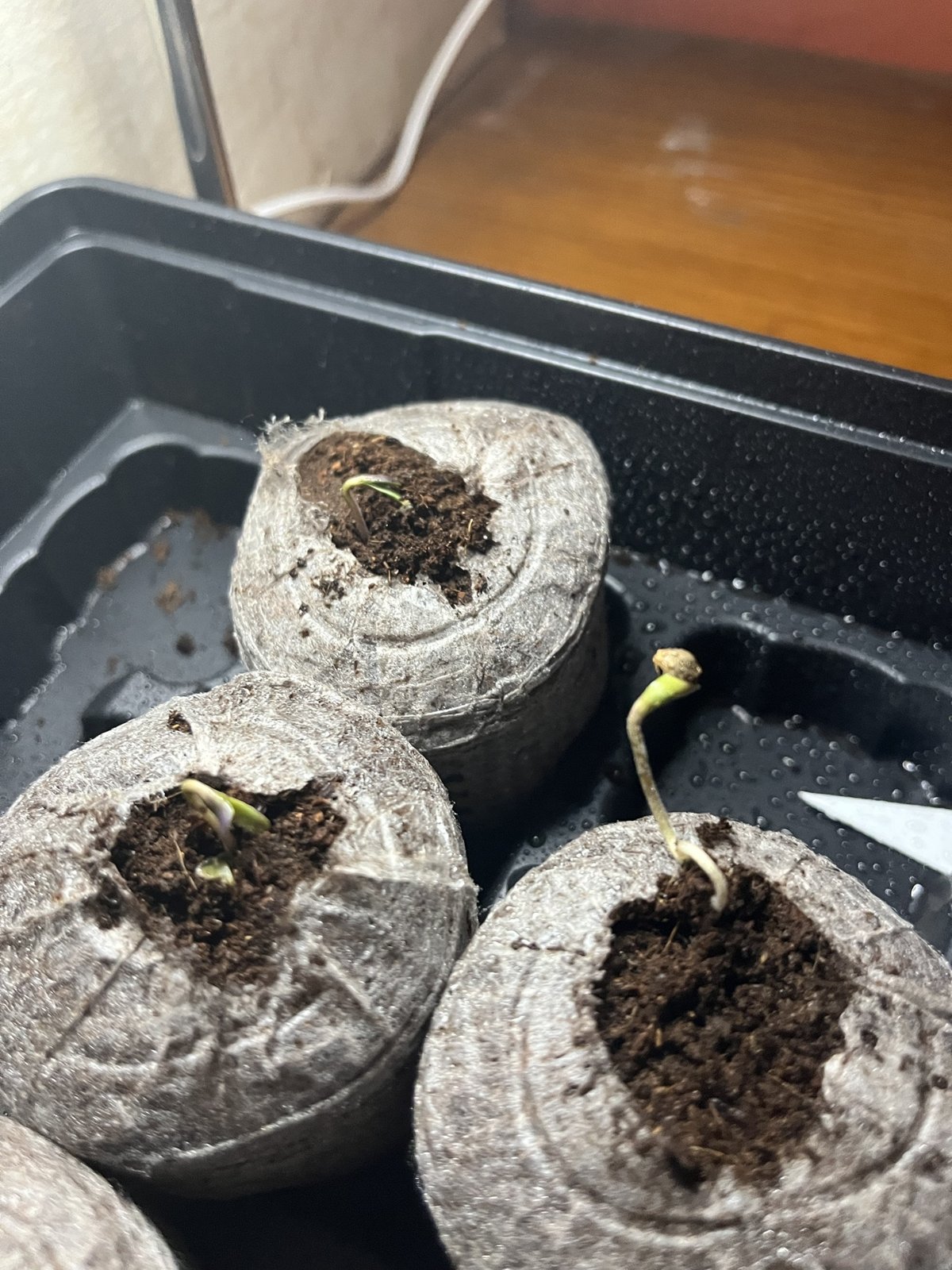
Seedling stretched and flopping over? Bury the stem
If a seedling grows a long, thin stem and can’t hold itself up, you can usually save it. Replant it deeper, burying the extra stem up to just below its first leaves, the small round seed leaves. The buried part of the stem will grow new roots. That gives the plant a sturdier anchor and more roots to drink and feed with.
- Get a deeper pot, or the next size up, filled with the same soil.
- Water lightly first so the soil holds together, then lift the seedling out by its soil, not by the stem.
- Set it in deep, so the soil comes up to just under the first leaves. Don’t bury the leaves themselves.
- Firm the soil gently around the stem until the seedling stands up on its own.
- Water lightly around the edge, then let it dry back. A freshly buried stem sitting in soggy soil can rot, so go easy for the first week.
- Fix the cause. Stretching usually means the seedling isn’t getting enough light. Move it closer to its light, or ease it into more sun, and give it a gentle breeze to help the stem toughen up.
Know the difference though. If the stem is pinched, brown or mushy right at the soil line, that’s likely damping-off, a soil disease, not stretching. Burying won’t fix that. See the common problems above.
Why it works is that cannabis stems can grow new roots. It’s the same ability that lets growers root cuttings from a plant (HortScience, 2022). Burying a stretched stem puts that ability to work. Research on burying seedling stems specifically is limited, so treat this as a well-tested grower practice rather than a measured result.
FROM MY GROW
What my first season taught me about starting out
Pick seeds for your weather first. The best advice I’ve given anyone is to choose cultivars that finish before your weather turns. Here in the Ohio Valley, late season means rain and heavy humidity, so how fast a plant finishes matters as much as anything on the seed pack.
Leaf shape won’t tell you mold resistance. Dense buds can stay wet longer, so density does matter, but you can’t judge mold resistance from leaf shape or a sativa or indica label. It varies cultivar by cultivar, and even a tolerant plant isn’t immune. More on that in Pest & Disease Prevention.
I started in Happy Frog mixed with perlite and worm castings, and I held back on extra supplements early because young plants burn easily. My tap water runs around pH 7 and I didn’t adjust it in that amended soil mix, and it worked in my setup. That part is specific to soil. If you grow in coco or hydro, pH matters a lot more, so don’t copy that step.
Caterpillars are the devil. They chewed up some of my seedlings before I knew what was happening. Check young plants every day, including under the leaves. I don’t spray tiny sprouts, and once plants are bigger, anything I use goes by its label for the crop and growth stage.
This is my own experience from one season in southern Ohio, not a tested result.
Free printable: Picking Strains for a Humid Season
Use it before you order seeds this winter. It covers what matters most for a wet, humid season: finish time, mold tolerance, bud density, and what leaf shape can’t tell you. Then a worksheet to compare every strain you’re considering side by side against your frost date. Enter your email, confirm it, and the link arrives in your inbox along with all my other free printables.
After you sign up, check your inbox for an email from WordPress.com and tap Confirm. Your printables arrive right after. Don’t see it? Check your spam or Promotions folder. One newsletter a month, unsubscribe anytime. See all the printables
By the way, if you’re not sure where to start looking for seeds, Multiverse Beans is a good place to begin. I know the owner personally, and code GROWGREEN saves you 10%.
That’s an affiliate link: you save 10% and I earn a 5% commission, at no extra cost to you. Federal rules on cannabis seeds are set to change on December 11, 2026, so check current federal and state law before you order.
Found seeds in your bud?
Finding a few seeds in buds from feminized plants usually means one of two things. Either the plant made a few male flowers of its own and pollinated itself, often called a hermie, or pollen drifted in from a male plant somewhere nearby.
- If the plant pollinated itself, the seeds should all be female. In a 2020 study at Simon Fraser University, seeds from hermaphroditic flowers grew into plants that tested genetically female. [Punja & Holmes, 2020]
- The catch is the herm risk. Many growers believe seeds from a plant that hermed on its own are more likely to herm too. That makes sense if the mother had a genetic tendency to do it, but the research hasn’t settled it. The same study notes the triggers for hermaphroditism haven’t been well researched, and that stress and other outside factors may play a role. They didn’t test whether the offspring went on to herm.
- If pollen came from somewhere else, the seeds could be male or female, and the father is a mystery.
Can you grow them? Yes, for fun. Just don’t grow them next to plants you care about. Check them often in early flower for small banana-shaped male parts or pollen sacs, and pull the plant right away if you find any, so it doesn’t seed the rest of your garden.
What the research says
A 2024 review by Langa and colleagues looked at cannabis strains and the inside and outside factors that may affect how seeds germinate and how seedlings get going. The authors point out that research on cannabis seed physiology and seed quality is still limited. That’s why I don’t promise a set number of hours or days for every seed.
References
Langa S, Magwaza LS, Mditshwa A, Tesfay SZ. Characterization of cannabis varieties and the intrinsic and extrinsic factors affecting cannabis germination and seedling establishment: A descriptive review. Industrial Crops and Products. 2024;208:117861. https://doi.org/10.1016/j.indcrop.2023.117861
Punja ZK, Holmes JE. Hermaphroditism in marijuana (Cannabis sativa L.) inflorescences: impact on floral morphology, seed formation, progeny sex ratios, and genetic variation. Frontiers in Plant Science. 2020;11:718. https://doi.org/10.3389/fpls.2020.00718
Grow Green Outdoor provides general educational information, not legal, medical, veterinary, or individualized agronomic advice. Check local laws and keep plants, seeds, tools, and growing products securely away from children and pets.

