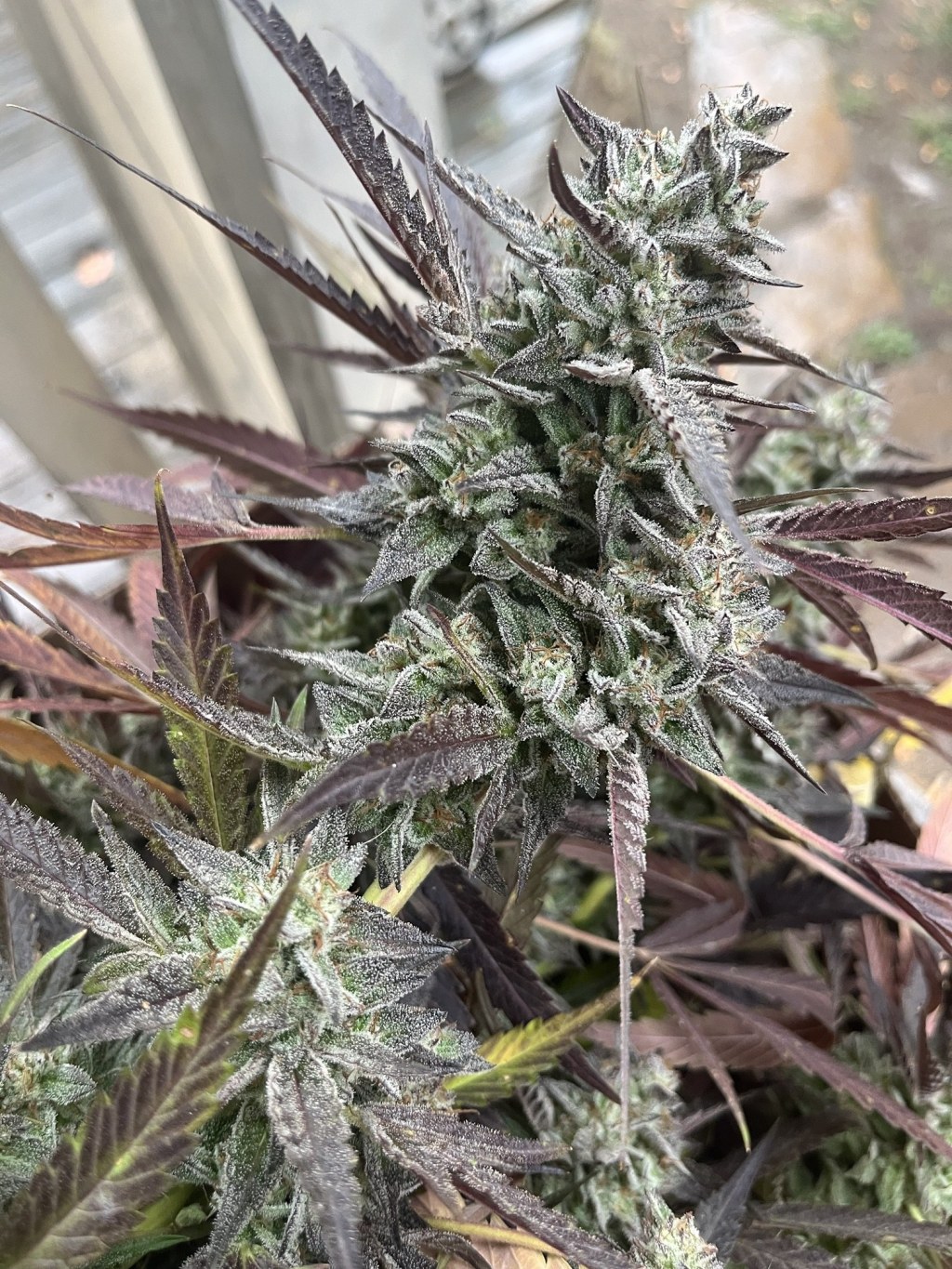
I grew two Durban Cake testers from Purple Caper this season. The breeder told me it’s Purple Caper’s cookie strain crossed with Durban Poison, and it grows more like a 50/50 hybrid. Same strain name, same breeder, same garden, and they turned out to be two completely different plants. That’s normal with seeds, since every one is a little different genetically. But seeing it side by side taught me a lot.
This is part one: the fast-flowering pheno, which is harvested and curing. The second plant was harvested November 1 and is drying now, and I’ll add its dry, cure and smoke report here once it’s done.
These two were my absolute best plants of the season, and by far the most mold and mildew resistant in my garden. Neither one had powdery mildew on its buds.
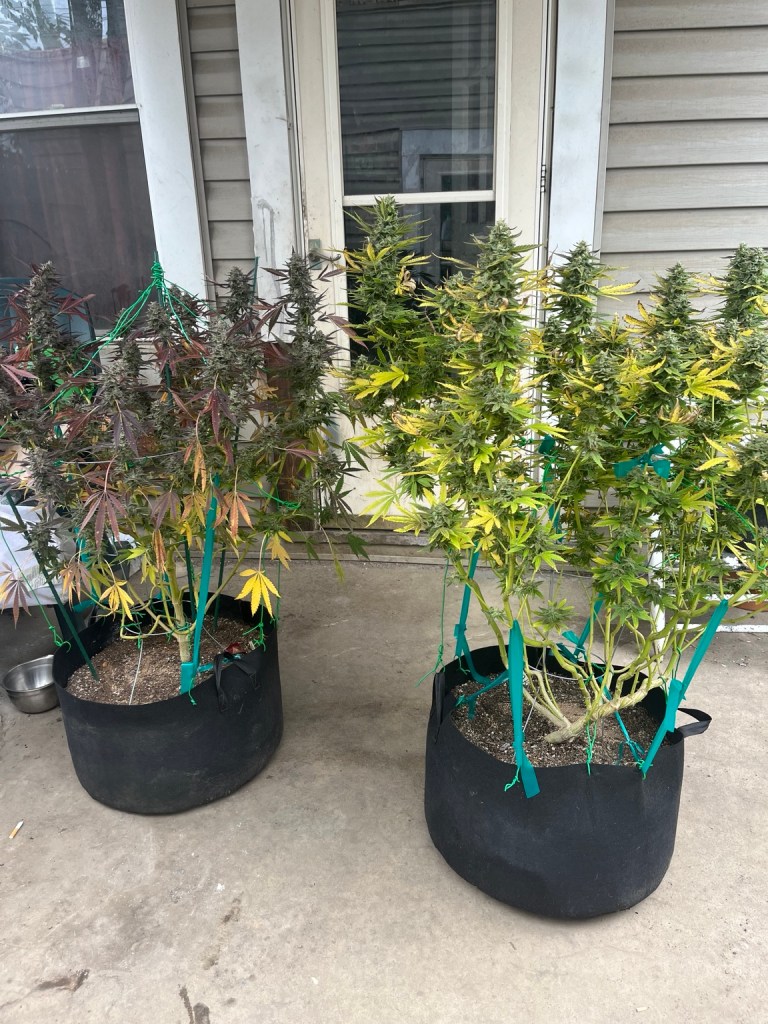
This is the part I wanted to show with these two side by side. Both are Durban Cake testers from Purple Caper, but they didn’t follow the same schedule. The purple one was my faster-flowering pheno, while the greener one kept going longer. Same strain name, same garden, and still two different plants. I’m not going to pretend a photo tells us exactly why they turned out different, but it’s a good reminder not to assume every plant is going to finish on the same calendar. I had to watch each one for itself.
Pheno 1: the fast flowerer (funky skunk and lemon Pledge)
A rough start
I started it indoors on April 15 in a Jiffy pellet, and it was the only Durban Cake that survived that batch. It stretched tall and thin, so I moved it into a small pot of plain Happy Frog and buried the extra stem. It rooted from the buried stem and took off. I up-potted it on May 3 and May 19, hardened it off, and moved it out to a 15 gallon fabric pot on the deck.
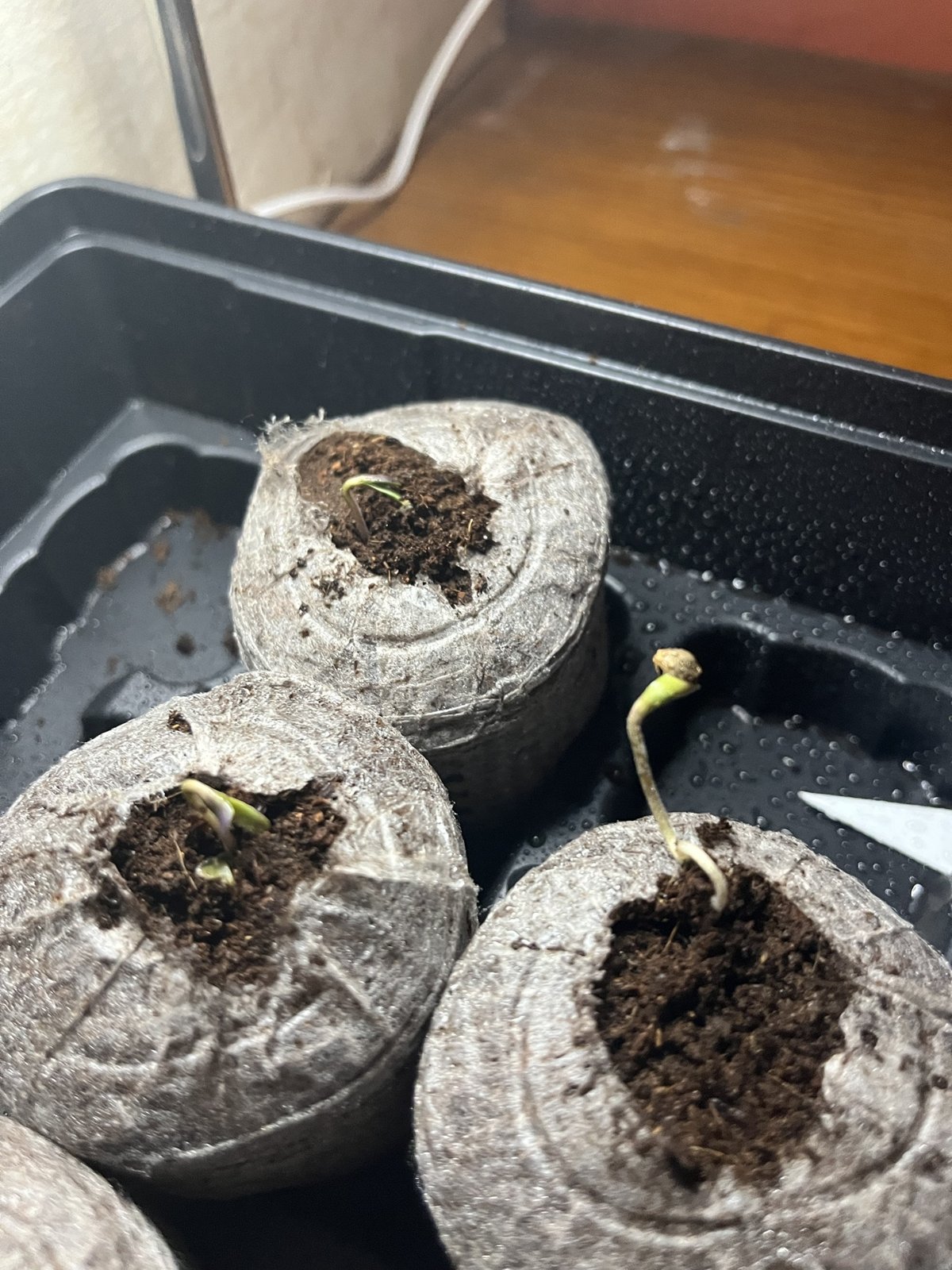
If you have a seedling like this, the steps are in Seeds, Germination & Seedlings.
The grow
- I trained her to about 20 tops. Her branches sometimes cracked or snapped when I bent them, so I wired them back up, and they recovered every time.
- She grew up through a tomato cage for support.
- She was my earliest photoperiod and my fastest to finish. She started flowering the last week of July, about two weeks ahead of the rest.
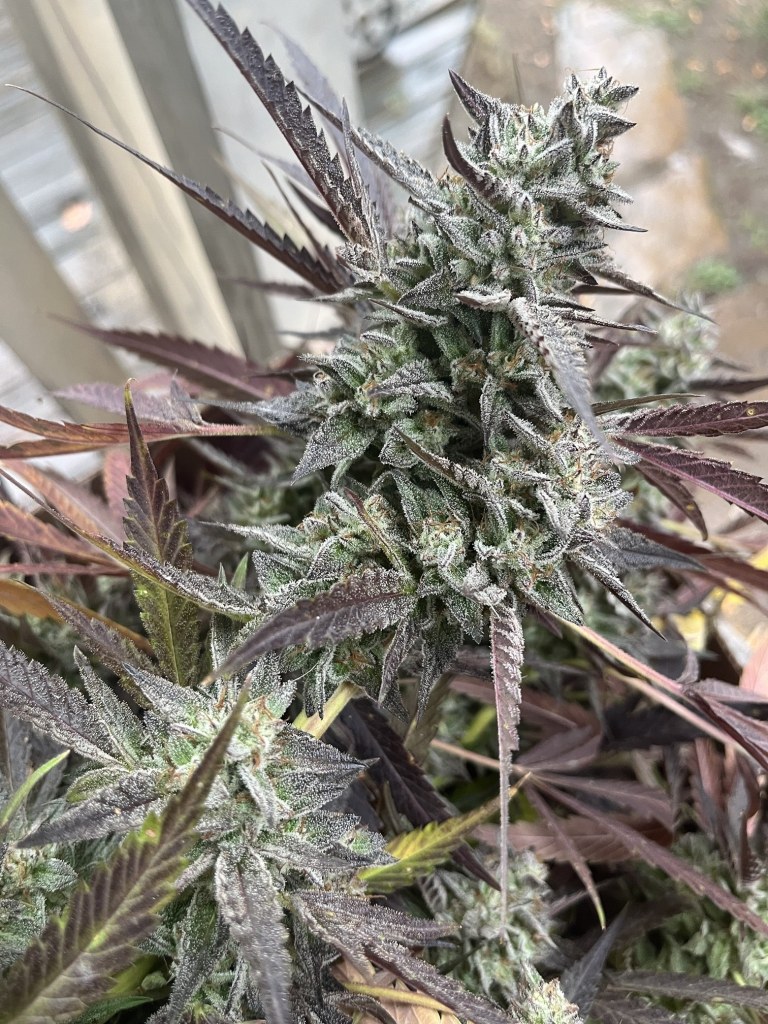
- Late-September nights of 45 to 50°F brought out deep reds and purples. Color like that comes from the plant’s genetics. Cool nights just bring it out.
- Nothing showed up on the buds. I spotted one or two tiny questionable spots that might have been early powdery mildew, or might have been something else entirely, and I harvested before anything could come of them.
- She got plain water only from September 30 to the end of the season.
Harvest, dry and cure
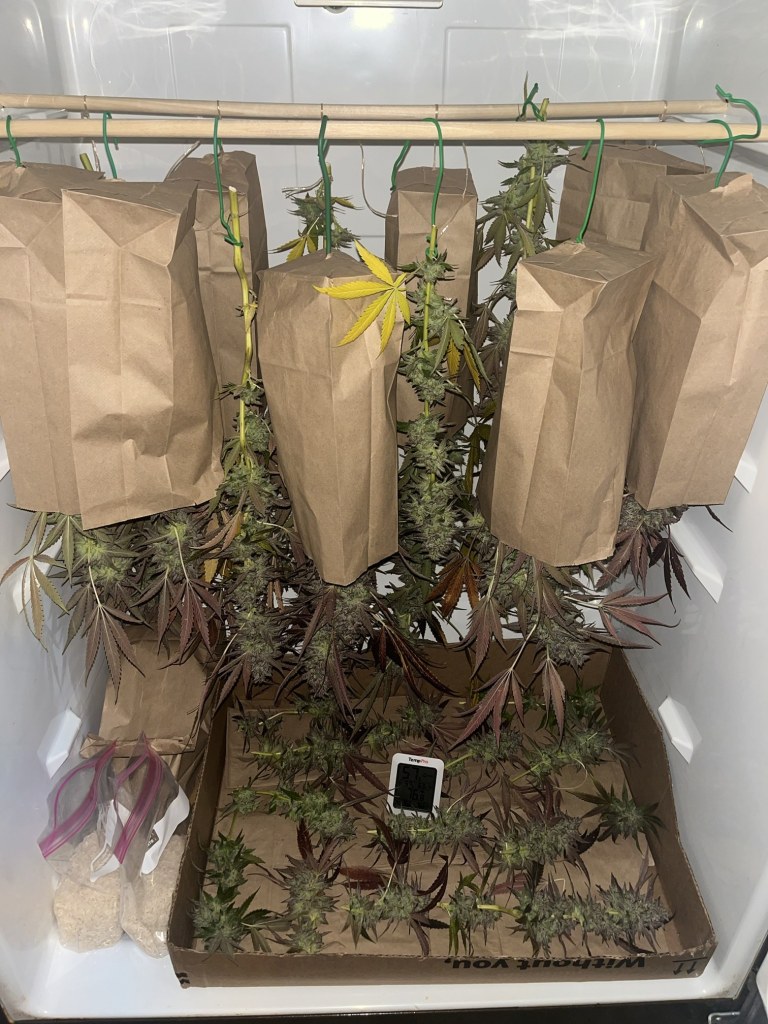
- I harvested her on October 10.
- She dried for 13 days in my Lotus Dry fridge. The dense buds took longer than my autos did. The whole method is in The Lotus Dry: Why I Keep Coming Back to It.
- She gave me 9.5 ounces dry, a good size.
- Coming out of the dry, she smelled like funky skunk with a deep, dank smell that sits in your nose. After about a week of curing, she picked up a lemon Pledge smell on top of the funky skunk.
- One week into the cure, she’s so, so sticky and covered in trichomes. Some of the stickiest buds I’ve ever handled. The RH in the bags is holding right at 60 to 62%, so the dry came out right and the cure is on track.
Smoke report
Whew, it’s potent. The inhale hits you with a very pungent, almost offensive skunk up front, but the exhale is smooth, with lemon Pledge and fuel on the way out.
The effect is very comfortable and pretty 50/50, with a nice headband feel around my head and a decent energy surge. No anxiety at all, which is exactly what I have to have. These are my first impressions about a week into the cure, so I’ll update this if it changes as the cure goes on.
How a strain hits is personal. This is how it hit me, not a promise of how it will hit you.
Pheno 2: harvested and drying (oranges dunked in gasoline)
The second Durban Cake started about two and a half weeks after the first. I germinated it first and planted it straight into a small pot of plain Happy Frog, then hardened it off and moved it into a 15 gallon fabric pot. It’s trained into a wide open bowl with about 25 tops, and it smells nothing like its sister: loud, sweet oranges dunked in gasoline. Like its sister, it came through the season with no powdery mildew on the buds. I cut it on November 1, my last plant of the season, and it’s drying in my Lotus Dry fridge now. I’ll add the dry, cure and smoke report here when it’s ready.
Smell is just what my nose tells me, not a lab test. My own experience from one season in southern Ohio, not a tested result.


Leave a Reply